Bank of Canada Announcement Oct 28 2026
The Bank of Canada raised its key interest rate by 0.25 percentage points to 2.5% this morning, its first increase in this cycle.
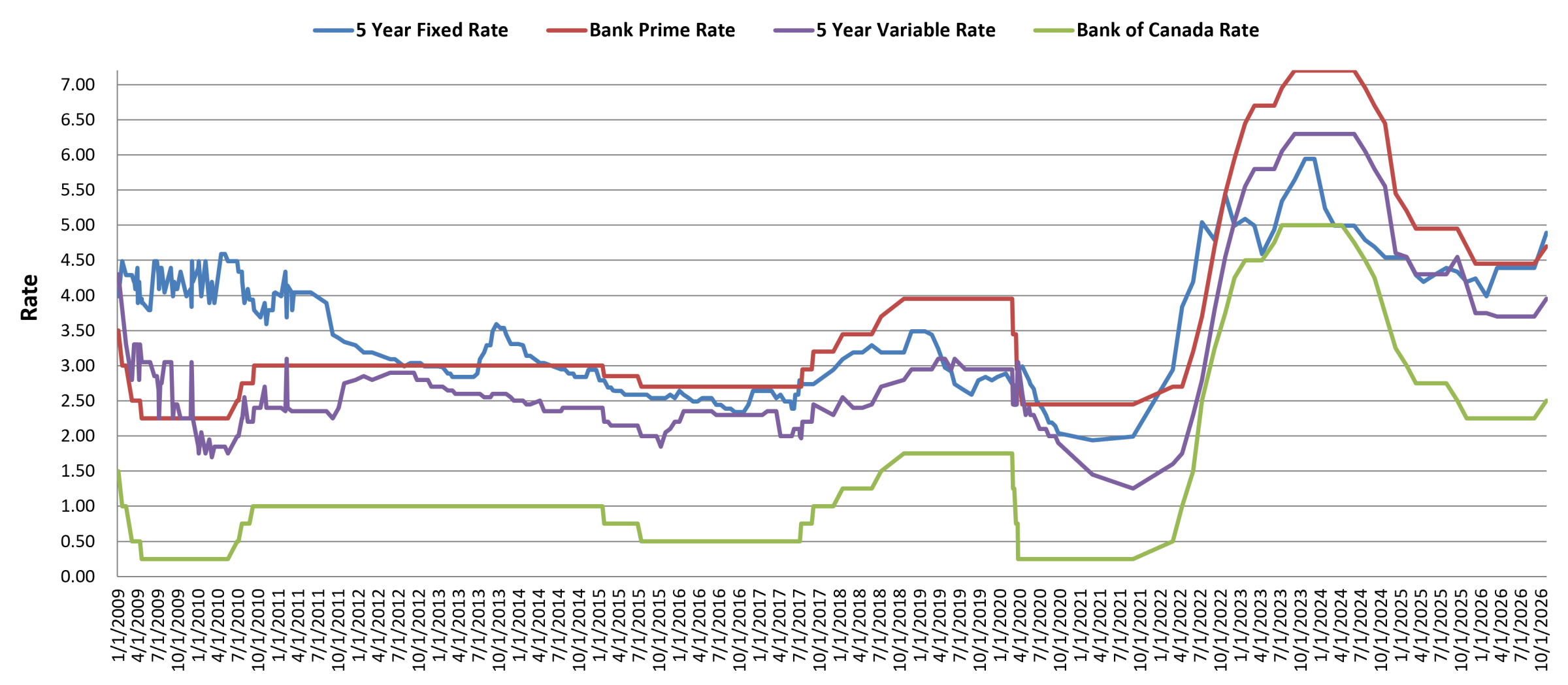
The Bank of Canada raised its key interest rate by 0.25 percentage points to 2.5% this morning, its first increase in this cycle. For Ottawa homeowners and buyers, the change will show up first in variable-rate mortgages and lines of credit, and it signals that borrowing costs may stay higher for longer than many expected. The Bank also left the door open to more increases, though it said it will “proceed carefully.” Its next rate announcement is scheduled for December 9, 2026.
- The Bank of Canada raised its policy rate by 0.25% to 2.5% on October 28, 2026.
- High oil prices are the main driver, with inflation expected to reach about 3.5% by year-end.
- Variable-rate mortgages and HELOCs will feel it first, at roughly $14 more per month per $100,000 owing.
- Fixed rates follow bond yields, which have already risen, so anyone renewing soon should consider a rate hold.
- Ottawa buyers may qualify for slightly less, making a pre-approval more valuable.
- More hikes are possible; the next decision is December 9, 2026.
Why the Bank raised rates
The short answer is energy prices. With the conflict in the Middle East now in its eighth month, oil prices have stayed high, and inflation has hovered around 3% since April. The Bank expects it to climb to about 3.5% by year-end. Until now, the Bank could look past much of this because it was concentrated in gasoline. Excluding gas, inflation was just 2.2% in September. But the Bank now sees higher fuel and shipping costs starting to spread into the prices of other goods and services, and its surveys suggest businesses will pass more of those costs on to customers over the next year. The economy has also been stronger than forecast. Growth hit 3.3% in the second quarter and about 2% in the third, giving the Bank room to act. It now expects inflation to average 3% in 2027 and not return to its 2% target until mid-2028. This hike is meant to stop high energy costs from becoming broad, lasting inflation.
If you have a variable-rate mortgage
You’ll feel this change soonest. Lenders typically raise their prime rate by the same amount within a day or two of a Bank of Canada move, and variable mortgage rates and HELOCs are priced off prime. As a rough guide, a 0.25% increase adds about $14 a month for every $100,000 owing on a 25-year amortization. On a $500,000 mortgage, that’s roughly $70 more per month, or about $840 a year. Your exact change depends on your lender, rate and remaining amortization.
- Adjustable-rate mortgage: your regular payment goes up to reflect the new rate.
- Variable rate with fixed payments: your payment stays the same, but more of it goes to interest and less to principal. Watch for your trigger rate, the point where your payment no longer covers the interest.
- Home equity line of credit: interest charges rise right away on any balance you carry.
If you have a fixed rate or are renewing soon
If you’re in a fixed-rate term, your payment won’t change until renewal. But fixed rates for new mortgages and renewals don’t follow the Bank of Canada directly. They track government bond yields, which the Bank noted have already risen since July. If your renewal is coming up in the next 6 to 12 months, now is the time to plan. Many lenders will hold a rate for 120 days or more, which can protect you if rates keep climbing while still letting you take a lower rate if one becomes available. Renewal is also your best chance to shop around, rather than simply signing the offer your current lender sends.
If you’re buying a home in Ottawa
Higher rates can reduce how much you qualify for, because lenders test your finances against a rate above the one you’ll actually pay. Even a small increase can trim your maximum purchase price. The Bank expects housing to stay relatively weak, so buyers may still find more choice and less competition than in past years. The key is to lock in a pre-approval before rates move further. A pre-approval with a rate hold tells you exactly where you stand and gives you confidence when you make an offer.
The Bank said there “could be a need to increase the policy rate further,” but it stopped short of promising more hikes. Much depends on two things it called the biggest uncertainties: the Middle East conflict and how much businesses raise prices to cover their costs. Canada-US trade is another wildcard, with new US tariffs expected to slow growth this quarter. The next decision comes on December 9, 2026, followed by the Bank’s next full economic outlook on January 27, 2027. We’ll be watching both closely and will share updates here.
Talk to an Ottawa mortgage broker
Whether you’re on a variable rate, facing a renewal or getting ready to buy, a quick conversation can help you understand what this change means for your budget. As brokers, we compare options from many lenders, not just one, so we can help you find the right rate and structure for where things are heading. Contact us today to book a free, no-obligation review of your mortgage. This article is for general information only and isn’t financial advice. Payment estimates are approximate. Source: Bank of Canada announcement, October 28, 2026.